How to Play Charades: Rules, Tips, and Variations
Charades is a classic party game that never fails to bring excitement to any gathering. Whether you’re a newcomer or looking for a refresher, here’s a quick guide on the essential rules, suggested group sizes, and helpful variations everyone enjoys.
Loved by players
Loved by players
1,000+
downloads
App Store and Google Play
5 stars
5-star rated on the App Store
What players say
Set up teams in under a minute and laughed for an hour.
No installs for my friends - just pass the phone.
The built-in word bank keeps throwing new prompts so nobody gets bored.
Free - iOS & Android
Play now - Get Showem
Choose categories and round rules, run teams and timers, and keep scores on one phone - built for in-room charades on iOS and Android.
Fully customizable game rules
Add your friends in seconds
Automatic team shuffling
Ready, set, Showem!
Download Showem free


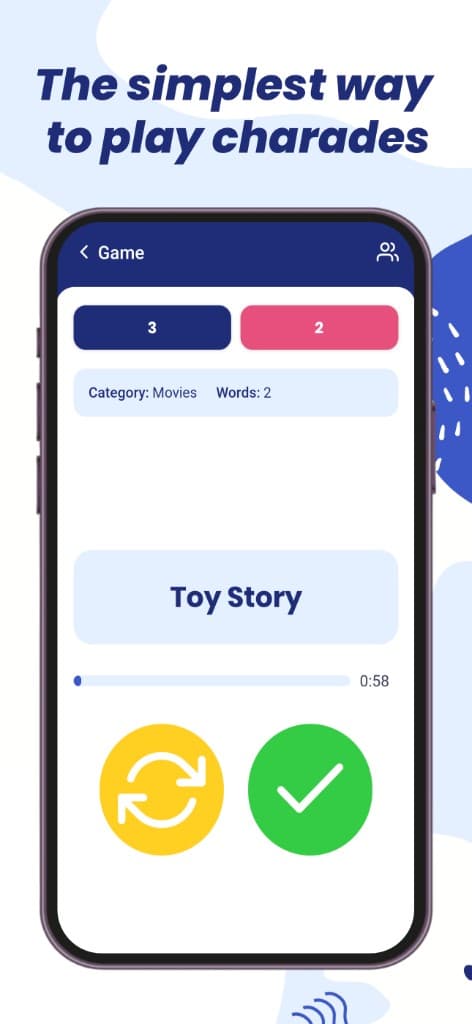
See how Showem works
Screens from the latest app - from setup to the word on the card.

Fully customizable game rules

Add your friends in seconds

Automatic team shuffling

Ready, set, Showem!
Essential Charades Rules
Charades is played by splitting your group into two teams. Each round, one team selects an actor who tries to convey a randomly chosen word or phrase without speaking, pointing to objects in the room, making any noises, or mouthing words. The actor uses only gestures and body movements for their teammates to guess the word. No lip-reading is allowed, maintaining fairness and the challenge of the game.
How Many People and Turn Timing
Charades works best with at least four players, as you need two teams with one actor and at least one guesser per team. Larger groups make the game more energetic, but there’s no strict upper limit. For each turn, the typical time limit is 60 seconds, which is enough to keep the pace lively. Some groups prefer 1.5 or even 2 minutes, but one minute per turn is the most common choice to keep everyone engaged.
Popular House Rules and the Showem App
Over time, every group creates its own twists. Some allow certain non-verbal sound effects, while others use themed rounds or stricter hand signals. Switching teams after each round, or using scoring systems for streaks, are popular variations. Showem makes setup a breeze, providing a bundled, offline-ready word bank and timer for instant fun with any group size and your favorite house rules.
How to Act Out Hard Words and Titles
When a prompt looks impossible, do not try to mime the whole thing at once. Start by showing what kind of prompt it is, for example a film, a song, an animal or a job, so your team can narrow down the options. Then break longer titles into parts and act out one part at a time, using a quick sign for the number of words if your group agrees on one. For abstract ideas like freedom or jealousy, show a situation where the feeling appears instead of the feeling itself. Big, slow, exaggerated movements read better than small fast ones, and repeating a gesture is often more useful than inventing a new one. If your team is stuck, switch to a different part of the word rather than repeating the same clue louder. And when a prompt is truly hopeless, skipping it and moving on beats burning the whole turn.
Choosing Words for Kids, Mixed Ages and Big Groups
The best charades prompts are ones that everyone in the room can recognize, so match the words to the audience. With young children, stick to animals, everyday actions and simple objects, and let them act in pairs with a helper if they get shy. In a mixed-age group, mix easy and harder prompts and let each team choose a difficulty level so no one feels left out. With a big group, split into more than two teams or rotate the actor often so people are not waiting too long for a turn. Keep a good balance between categories too, since a round of only movie titles can leave some players guessing blindly. In Showem you can pick the categories and difficulty before the game starts, which makes it easy to tune the words to the people on the sofa.